The Photographic Memory :: Myth, Legend, Fact or Fiction

The Photographic Memory

the Truth is Out There…

Brain Mind Photographic Eidetic Memory

What exactly is the “photographic memory”?


The elusive photographic memory; ever experienced it? Chances are you may have come across it in grandiose Hollywood films and television shows. Furthermore, the photographic memory is expressed in such a way that it seems both superhuman and abnormal!

The apex of the photographic memory experience has been portrayed accurately by characters such as:

  • Sheldon Cooper from The Big Bang Theory”
  • Will Hunting from Good Will Hunting
  • Mike Ross from Suits

…and many more

You know, writers may be writing for fiction but they are heavily influenced by real life events that shape their work. They also have the power to release material that is inaccurate; only to be aired. Not only is the photographic memory, itself, is one of those real life events its also one of those inaccuracies that writers write about!

Believe it or not….The phenomenon that looks to good to be true…is indeed true. Even worst, the name ‘photographic’ itself is wrong. At best, it’s inaccurate, and at worst it is deceptive.

The actual, technical and medical term for it is…the Eidetic Memory.


Photographic Memory vs. Eidetic Memory


Despite two different names, if there is a correct term for this real and amazing memory then why on earth is it expressed wrong?

The answer lies with people’s personal experiences with visual learning, i.e. seeing and absorbing information via their eyes. Considering that permanent and verbatim recall of information is a classic function of eidetic memory, the ‘photographic’ metaphor was created as to identify with that type of flawless recall and the name stuck.

In both real and scientific terms, the eidetic memory does not rely upon visual input but uses the remaining senses of the human body as well.

Therefore the term ‘photographic’ is used interchangeably but loosely.


The Scientific view?


The typical view in mainstream science is that it does not exist at all and it is a myth. Take for example, Joshua Foer’s article in the magazine, Slate, he promotes the myth theory by downplaying past examples of people but without citing any evidence that that perpetuates his views. (slate.com/articles/health_and_science/science/2006/04/kaavya_syndrome.2.html)

One of those is exceptional people is Stephen Wiltshire, an autistic artist  with a vivid photographic memory, that accurately draws stunning city landscapes purely from memory alone. The accuracy in his illustrations is flawless he has been awarded an MBE for his works. (dailymail.co.uk/news/article-1223790/Autistic-artist-draws-18ft-picture-New-York-skyline-memory.html)

Such feats do not lie only with Autism. Recently, an ordinary policeman featured on the news used his ‘photographic’ memory to identify and capture hundreds of criminals over the last five years purely from memorizing them from faces on wanted posters. (huffingtonpost.com/2013/06/29/andy-pope-photographic-memory-pcso_n_3519213.html)

Many stories like those above provide a basis that the eidetic memory does indeed exist, contradicting many of the standard scientific views.

Psychologists wrestle with this subject in the laboratory and have established the existence of Eidetic Imagery (EI), in which they conclude that some people, mainly children, have this ability. The after-image of something they have seen is embedded, or retained, with vivid detail like an image in their minds. (theguardian.com/lifeandstyle/2012/jan/14/truth-about-memories-jarrett)


You have this power too


Everybody of all ages and abilities has access to this extraordinary memory. Perhaps it is not as rare as you, or I, have been led to believe.

Let me briefly tell you a story that occurred about a month ago. A customer came in to my work and I was talking about the photographic memory. She overheard me and commented about recall ability and reading speed of her daughter-in-law and how she “completes degree after degree!” I was astonished!

Most people would say “Well that’s OK for her. But I can’t do it, it is impossible!” The good news is we all have this ability and therefore we can all tap into it and use its unlimited resources. Now that is great!

Unfortunately, when we all started school from age 5 we were programmed out of using this ability and were taught the rote-memory system of learning which uses reading as its vehicle.

Reading uses a short-term memory system and we quickly forget almost everything that we were taught and had to learn by repeatedly revising or ‘cramming’ to absorb it all. Not good… It is a huge waste of time.


There is a Silver Lining – The keys to unlimited success are yours


But don’t worry, there is a long-term memory system out now that can reconnect you to those eidetic abilities that you lost as a child along with allows you to absorb extreme amounts of information at lightning quick speeds!

The method is called Mental Photography, also known as ZOXing. It has been around for over 35 years, and has helped thousands of people tap into their innate, photographic memory and become eidetickers again as well as ZOXers!

Years of independent scientific research; supports the existence of your eidetic memory and proves that anyone can learn at astounding speeds accompanied with a memory that can recall and retain all needed information at will, just like those Hollywood characters I mentioned earlier!

Richard Welch, the Father of Mental Photography said, “The brain, the brain, the brain. The more we learn about the brain, the more we realize how little we really know about it.” His statement is still correct today. If scientists knew everything there is to know about the brain, then there would be no question whether the photographic memory exists; or if it is myth, legend, fact or fiction.

For scientists to subscribe to scientific principle, and then proclaim the photographic memory does not exist is professional heresy. Or does the existence of the photographic memory fill them with so much fear; they dare to cross the line of professional integrity.


Create your best path,

Abel Journeyman

(Contributing Author)

Learn Your Lessons Well

Learn Your Lessons Well

Small Piece of Large Universe - 400w

What is Your Universe?
What are Your Limits?
Discover Yourself!

What is a Lesson?

When people tell you about learning lessons, what does that mean to you? How would you go about learning lessons if you do not have an understanding of what a lesson is, or what lessons are about? Why are lessons important?

“To Learn Life’s Lessons well, you must first understand the Universe around you.” 

You will usually learn something about lessons when you begin school. Most teachers there will have a Lesson Plan, or a schedule of things they will be teaching you. Therefore, in this case, learning a lesson would be learning what your teacher is teaching you. For example, let’s say today the class is meant to learn the “times 2” numbers table. So the numbers table is explained to the class, examples given, then after being instructed on how to go about doing it, you, along with everyone else, get to recite it. The term “Learn your Lesson Well”, would be when you can demonstrate you know the table and what information it has; you have learned it well.

That is how it works in a structured plan.

Lessons in the Real World

When you go out into the world, you are on your own. The lessons in the real world have to do with your decisions, and the repercussions of your decisions. When you make a good decision, it generally will give a good feeling for a short amount of time. But, what happens when you make a bad decision. That gives you a different sensation. That other sensation is often called “pain”. Pain is the repercussion of making an incorrect decision. Pain can show up in many ways – physical pain, emotional pain, financial pain, etc.

Why do you think we are meant to feel pain when we make a wrong decision? If you sense pain as a result of your actions, you will likely think twice about doing it that way again, right? What if you forget about the pain you experienced the first time you made an incorrect decision? What do you think will happen if you make the same bad choice, again? Interestingly, the pain, as a result of your actions becomes bigger and more intense than the first time. Therefore, you keep abusing yourself more each time you make that same mistake. So, what will your next big mistake be when you are making decisions?

So, what you have just learned is when you make an error in your decisions, you will experience pain, until you “learn your lesson”. Also, if you are experiencing pain, there is likely a lesson attached to it. Look for the lesson. If you learn your lessons well, then you will be experiencing less pain on your journey than someone that does not understand lessons.

Your Universe around You

Look around you. You are literally the center of your Universe. It is your paradigm, your reality that you have created that interacts with the rest of the world. Your lessons deal with issues in your Universe and your reality. Therefore, those lessons are for you, and only you. Only you can really determine what they mean. Ultimately, you are the person that must deal with your lessons. Other people have their lessons they are responsible for. You have yours that you are responsible for as well. As your journey unfolds before you, you discover yourself and what you are doing here in this world. You also begin to understand the complex nature of your Universe. By understanding your Universe, you can glean much more information from your lessons.

By stepping forth and embracing your Universe, you are finding yourself and gaining an understanding as to what your lessons mean for you.

Good Luck, enjoy life, and Learn your lessons well!

Shannon Panzo

News Flash :: Escape to Australia :: Seating is Limited

Welcome to AustraliaAustralia Map - Basic

Visit the mysterious Land Down-Under, and while you are here,

Learn How to Exercise Your Brain

The eBrain Executive Seminar is returning to Victoria, Australia. Make your reservations now! Stay a while longer and turn your trip into a vacation!

On November 22, 23, 24, Shannon Panzo PhD, will be in Bendigo, Victoria, conducting the eBrain Executive Seminar for a group of dedicated individuals that want to gain a quantum leap in their life. More like a workshop than a seminar, this training gives you the tools to be effective in all areas of your life. Everyone has problems. Now you can have the solutions that give you independence; by learning how to exercise and use your brain for maximum productivity.

If you are traveling from outside of Australia, make sure to get your travel documents in right away. Approval times will vary based on your country of origin.

For bookings, email your query to: accounts [at] ebrain.com.au

Thrill Seekers Map of Australia

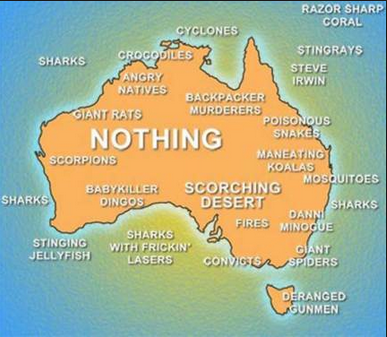
I wrote an article a while ago on the Australian Eastern Brown Snake, and how dangerous Australia can be. This will give you an idea of what I mean (Can you hear me chuckle?)  *<;^)

( Current Australians: You must admit, it is a exciting place to live! You are invited too.)

Australia for Thrill Seekers

Great Things Happen Here!

Mental Photography for Getting the Grade :: Get Smart

Get Smart and Pass Exams

Stack of Books - pass exams

Mental Photography for Students

Mental Photography techniques for students allows students of all ages to benefit through the increase in brain power. What you need is a tool to clear your mind to allow you to focus on your goal.

How Long We Study Has Nothing to Do with Success

As students, we are told that if we get good grades, then the good life will follow. We are told that to achieve good grades, we should study three to four hours for every hour we spend in class. But what if you could get better grades with less study time? What if you could cut your study time to a mere fraction of what would otherwise be required?

Is Formal Education Counterintuitive to a Photographic Memory?

Your mind is capable of assimilating information at gigahertz range – but there is something getting in the way of our learning. Ironically, the blockage is reading.  Reading constricts the flow of information to our brain, thus weakening our capacity on how to use Mental Photography. For many students, the education process and study is an impediment to their social lives and having fun.  What can be done to change that sad fact?

You Can Learn to Learn Naturally!

You can reactivate your Photographic or Eidetic memory. Here is how to develop photographic memory? Actually, your photographic memory is still active – you’ve just forgotten how to access it.  Once you regain access to your Photographic Memory, it will propel you as far as you want to go.  The act of performing Mental Photography for students exercises the brain in phenomenal ways, including your naturally occurring photographic memory.

Some people may claim that when students use Mental Photography on how to pass tests it is cheating. Of course it is NOT. Using your natural abilities to assimilate and recall information isn’t cheating – it’s your Ultimate Edge.

Shannon Panzo


Great Things Happen Here!

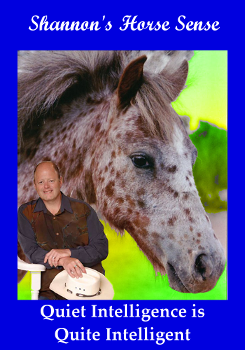
Quiet Intelligence is Quite Intelligent – Horse Sense really…

Horse Sense

Quiet Intelligence is Quite Intelligent

Quiet Intelligence is Quite Intelligent | Horse Sense - Shannon Panzo, PhDInsights from the animal world can give us a better picture of humanity.

Many people have pets. Often times they give their pets human characteristics, even though their pets are not human. Do your pets seem to want to be like you in some way. Studies have found that people often choose a pet that looks like them, or reflects their own personality in some way. Logic would suggest then that since a person may select a pet based on their own self, then it is much easier for that person to assign them human characteristics, much like looking into a mirror.

Too much Logic!

It is time to toss logic aside and look at characteristics that are not so easily explained. Studies have also shown that pets often have unusual and often unanticipated abilities. There are “Helper pets” that seem to know how to spot a problem with a persons health. But why would an animal choose to do this? The action of the helper pet extends to other people that are not even known by the animal. The most common type of helper animal is the dog, simply because there are more dogs owned and have social interaction with humans than any other domestic animal. A good example of a helper dog trained in this fashion is the seeing eye dog.

Hospitals and elderly care units have found it to be very good therapy to bring in comforting animals to be with the patients. Many patients have cut themselves off from communication with other people, but choose to communicate with the comfort animals. Many breakthroughs have been made in this way. But more than anything, it gives the patient that moment of caring and comfort – a gentle therapy.

(I am not suggesting you run out and get a pet. These decisions require thought and consideration. Some pets can be quite problematic. You must gain wisdom. ZOX Pro Training provides the means to gain that information. Choose wisely. Chances are you will be stuck with your decision for a long time.)

Are Animals Psychic?

Take a moment to think about a few things. Suppose you own a dog. You are around your dog every day. Your dog is friendly and sociable with others around you. Then one day out of the blue, you meet someone that your dog takes a complete dislike of, and maybe wants to take a chunk out of their leg. In other words, your dog is acting completely different than usual. What should these signals tell you? Dogs are much more perceptive on a natural level; a level you have been taught to ignore – instinct. If your dog does not trust this person, should you?

“Quiet Intelligence is Quite Intelligent”

So, what does it mean? Horses really don’t have a lot to say. While in the paddock, they may think, “Gee, there seems to be a nice bit of grass over there.” They wander over and chew on that patch of grass for a while. Then they see another bit of grass further on an they go through the same process. If there is a dominant horse already over there, then they will just look somewhere else. They really don’t mind communicating with people. They have just generally given up talking with people, because people don’t know they are being talked to. The horse thinks they are being ignored by the person, so the horse goes about their regular business… “There is another interesting clump of grass over there…”

Horses (equines) possess a “quiet” intelligence. They know the rules and what is expected of them. They prefer it that way. It is only when people intervene with their routine that unsettles them. Then suddenly, we want them to do things outside of their normal pattern. So, with repetition we teach them to have a new way of doing things. They will feel most comfortable with the new routine if it is relatively the same each time. But us silly humans, we want to do things differently all the time. It can be quite frustrating for the horse. For the most part, if done in a way the horse understands it, the horse will be somewhat cooperative until the new routine is established. Above all you must gain and maintain the horse’s trust.

Their intelligence stems from their ability to adapt to doing the things us silly humans want them to do.

The quote, Quiet Intelligence is Quite Intelligent, also gives you a lesson to work with and think about. Find the little piece of Wisdom for yourself.

Shannon Panzo

Great Things Happen Here!

1 4 5 6 7 8 23